
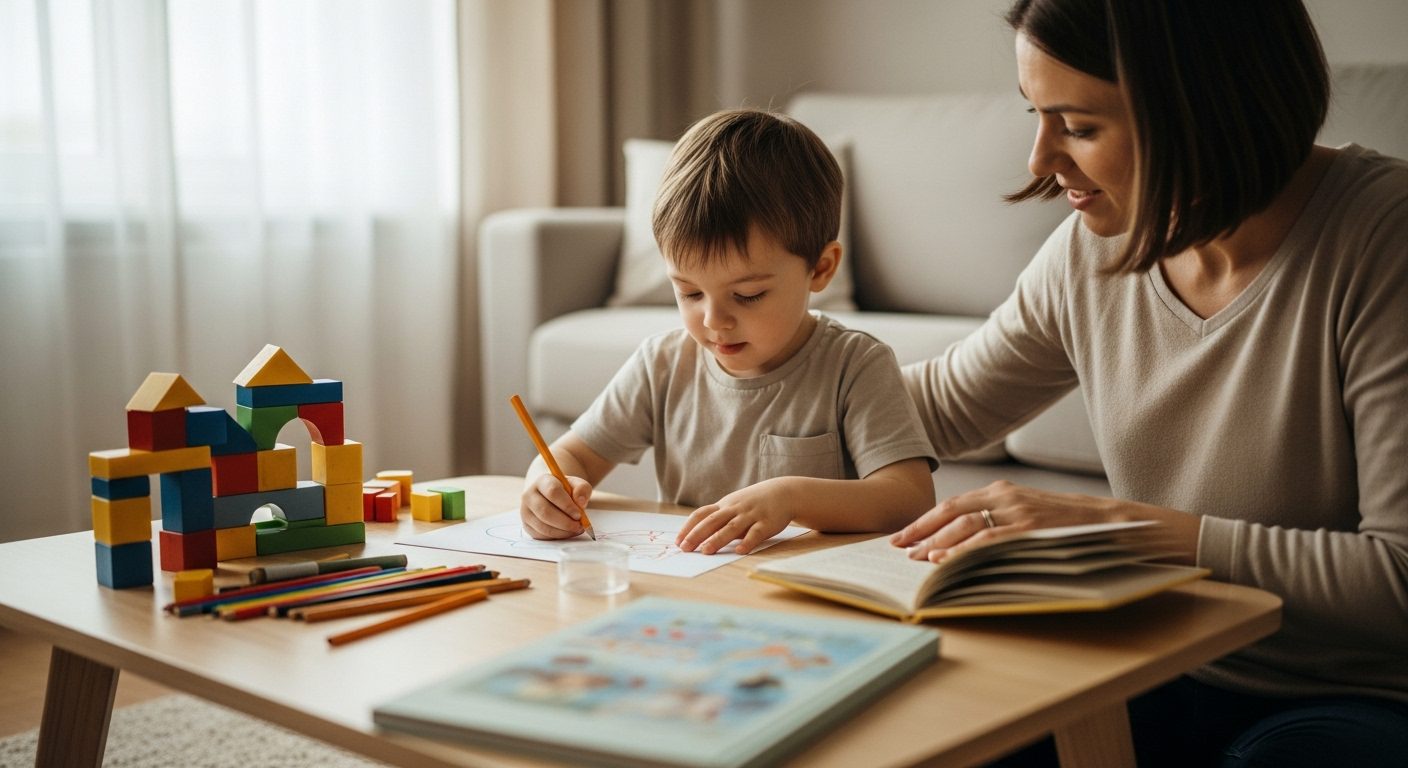
When a child spends most of his time at home, finding the right indoor activity makes a big matter for parent’s. Many kids on the autism spectrum feel more comfortable in a calm and familiar environment, but they still need fun ways to learn, play, and express their energy. The good thing is that indoor play doesn’t have to be complicated.
Small activities like sensory play, creative crafts, building games, or quiet movement exercises can keep children interested while also supporting their focus and emotional balance. With the right ideas, home can become a safe and happy space where autistic children explore, learn new skills, and enjoy their time.
In this guide, I will share fun and effective indoor activities that help autistic children stay active, creative, and comfortable while spending time indoors.
Tips to Help Your Autistic Child Play Indoor
1: Give it time
When introducing new indoor activities for autistic children, patience is very important. Some children may not join a game immediately, and that’s completely normal. Instead of pushing them, give them time to watch and understand the activity first.

Often, children feel more comfortable when they can observe quietly before participating. After a little time, they may start exploring the activity on their own. This gentle approach helps them feel safe, confident, and more willing to play.
2. Embrace the Power of Choice
Giving children the power to choose can make indoor play much more enjoyable. When kids feel they have control over what they want to do, they are more likely to participate with interest and confidence. Instead of deciding everything for them, try offering two or three simple activity options and let them pick the one they like.
In my experience, this small step helps autistic kids to feel respected and comfortable, while also encouraging independence. Over time, making their own choices can help them stay more engaged and enjoy playtime in a calm and positive way.
3: Make New Things Familiar
Many autistic children feel more comfortable when things look familiar and predictable. When introducing new indoor activities to them, it helps to connect them with something your child already knows and enjoys. For example, if your child likes building blocks, you can slowly introduce a new puzzle or stacking game that feels similar.
You can also keep the same place, same time, or same materials for the activity. This small sense of routine helps children feel safe and reduces the stress of trying something new. Over time, what once felt unfamiliar slowly becomes comfortable and enjoyable, making it easier for them to explore new activities with confidence.
Relationship-Building Activities for Autistic Child’s
In my course working with parents and caregivers, I’ve learned the critical importance of strengthening the parent-child relationship. Building a strong connection with an autistic child often starts with simple, shared activities. When parents spend relaxed time playing, talking, or doing small tasks together, it helps the child feel safe, understood, and valued.
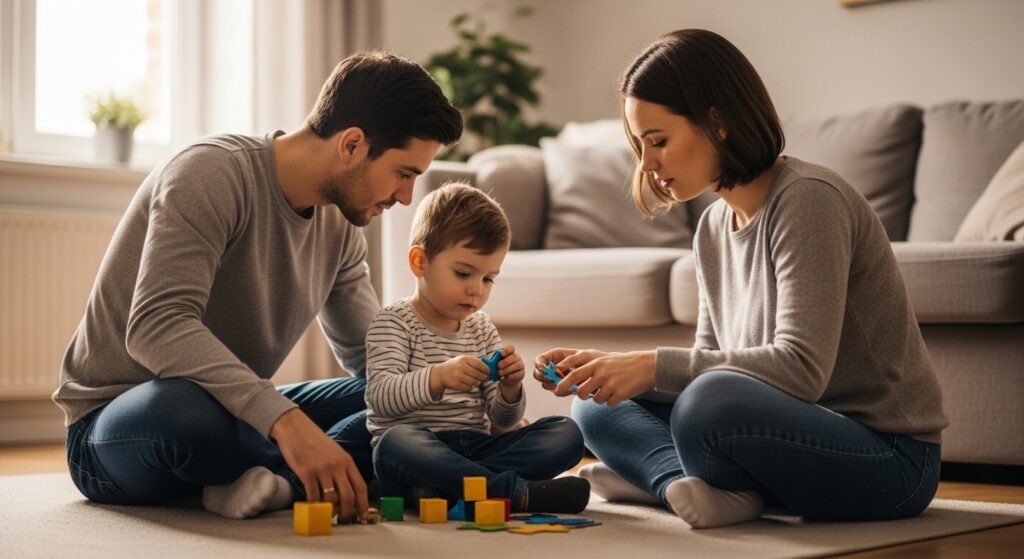
These moments are not just about play they are opportunities to build trust, improve communication, and strengthen emotional bonds. In the next section, We will explore a few simple activities that can help parents and children connect in a natural and enjoyable way at home.
1: Experiments
One of the most engaging science activities I’ve found is a terrific way to explore with your child while learning together and create a lasting bond. Before starting, consider what your child likes and any sensory issues; for instance.
If they dislike messy hands, making homemade playdough might not be ideal, but if they love bubbles, a kit like that can be a hit, keeping them engaged, curious, and excited to explore new activities safely while reinforcing learning and connection.
2: Building
Building together with your kids is a wonderful way to promote teamwork and bonding, and I’ve seen firsthand how even younger kids get completely absorbed in this type of fun activity. Using large Melissa & Doug blocks or a Hexbug Zone.
Which has been a recent favorite in our home, allows children to engage creatively while practicing problem-solving and collaboration, and the shared sense of accomplishment when a structure comes together strengthens connections and makes indoor activities both enjoyable and meaningful.
3: Sharing space
One piece of advice I always give a parent is that simply meeting your child where they are and sharing space with them can be incredibly powerful for connecting and building a stronger relationship. It’s important to resist the urge to ask too many questions and instead be fully present, comment on what they are doing.
Whether it’s a track super-fast or the animals in a farm and dive into the play alongside them. This simple, yet valuable approach gives children your undivided attention while fostering trust, engagement, and a sense of security during indoor activities.
Quiet Activities for kids
During indoor days, incorporating quiet activities can be essential for kids who are constantly processing sensory input and need to move their bodies. These moments of downtime allow children to rest while keeping their minds engaged, giving them the balance of activity and calm that many neuro diverse kids thrive on.
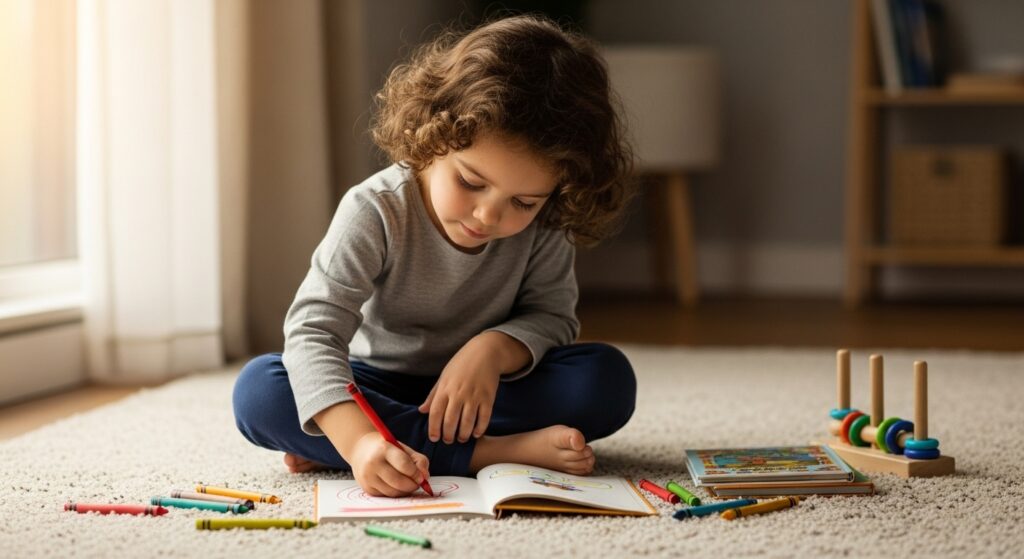
Paying attention to what they are seeking and offering structured or simple quiet options can transform time indoors into meaningful, restorative play.
1: Reading
No matter the age of your child, encouraging a love of reading can significantly boost literacy and support success in other areas. One of my favorites is to read together early, it might be you reading to your child, and later, it can be them reading to you.
Series like What Would Danny Do? beautifully teach the power of choice, making reading both educational and empowering for neuro diverse children.
2: Electronics games
Many parents wonder if electronic games are harmful for their child, but with moderation and clear expectations, they can be part of a balanced routine. Some tips for navigating screentime include setting a specific time for screen-playtime, using a timer that the child can hear, and communicating a plan for transitioning out of the screen.
At home, we encourage taking a deep breath and walking the tablet back to its home, while transitional warnings like “5 more minutes” help. One hack we use with Sean is to prompt him to ask for one additional minute, then follow through with the transition, which helps teach self-advocacy and signals when he is ready.
3: Drawing & Art
Open-ended and creative play like drawing is a good match for many kids and children, especially those who thrive with a little structure. Using a thumbprint book or a how-to-draw book can guide them gently, while 3-dimensional art projects such as air-dry clay let them explore colors and tactile sensations, which often becomes a hit with neuro diverse kids who love to feel and manipulate materials with their hands.
Sensory Integration Activities
Neuro diverse kids, like my son, naturally love sensory input and the chance to move, but it can get tricky indoors. The key is providing the right toy or activity for your child and giving them enough space to explore comfortably.
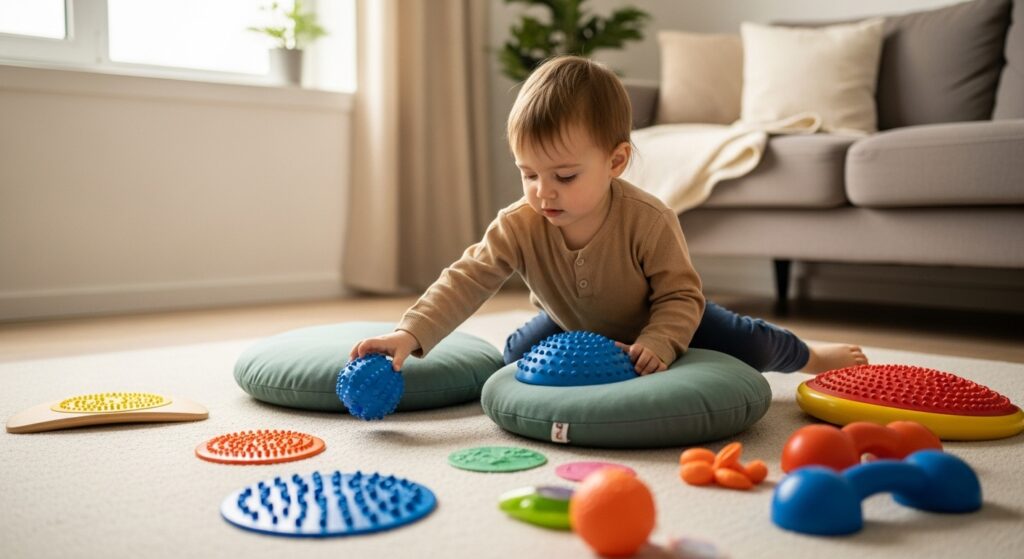
I’ve found certain websites full of favorites for exploring games to be incredibly helpful, and understanding what needs your children seek allows you to match activities accordingly, offering multiple options that keep them engaged while supporting their sensory development.
1: Tactile Stimulation
Stimulation that activates the nerves on the surface of the skin can turn any activity involving touch into a positive experience for sensory seekers, and one of my favorite ways is kinetic sand.
This open-ended, creative approach is deeply satisfying as little hands run through the grains, offering engagement that is both calming and joyful while encouraging fine motor skills and sensory exploration.
2: Vestibular Stimulation
Stimming often involves the vestibular system, located in the inner ear, which naturally responds to movement of the head. Any activity that moves the whole body and allows it to respond to gravity like jumping, falling, rocking, or swinging can be a beneficial indoor play option.
Setting up ladders or similar equipment at home has proven extremely helpful in supporting children to regulate their senses while enjoying safe, structured movement.
3: Proprioceptive Stimulation
comes from deep pressure on the muscles and joints, and engaging in weight-bearing activities like carrying piles of books to build a fort can be surprisingly effective. Simple swings that allow movement are popular and can provide a happy place for your child indoors, helping them regulate their body while enjoying a safe and engaging activity.
Social & Communication skills building Activities
On indoor days, encouraging children to play together can be a wonderful way to strengthen bonds, whether through parallel play depending on age and preference or by having them actively participate in a game.
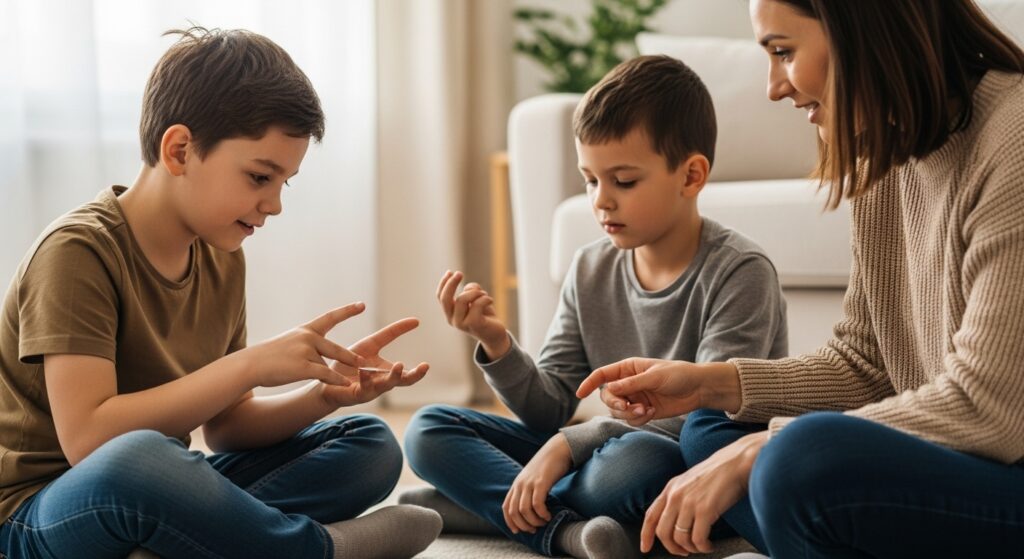
For a sibling of a neuro diverse brother, or as a mother managing both neurotypical and neuro diverse child, being mindful of the relationship between each and other is crucial, creating moments that are both fun and supportive of social growth.
1: Building Together
For kids of different ages, marble runs, soft rocket launchers in the basement, and pretend kitchen play are all great options that allow children to engage together, making activities both friendly and inclusive, even for those using AAC devices, creating moments where collaboration and fun naturally intersect.
2: Social Games
Some of our favorites games like Jenga are perfect for play together, combining building, togetherness, and small modifications so it works for the whole family; while a round of the traditional game may not always hold Sean’s interest, ending with blocks to build a city and expand his play with cars allows him to move on to favorite activities and continue game time in a fun and engaging way.
3: Baking & Cooking
Depending on the age of your children, baking and cooking can be a good way to bring siblings together, with mixing, measuring, whisking, and scooping as shared tasks; one tip is to choose a recipe you are familiar with and have all ingredients laid out before inviting them into the kitchen, while remaining patient and ready to embrace the mess that makes the experience fun and educational.
4: Task Boxes
Task box activities are a helpful way to organize play at home or in the classroom during an indoor day, as each container holds all the necessary parts of an activity designed for independent learning with multiple benefits.
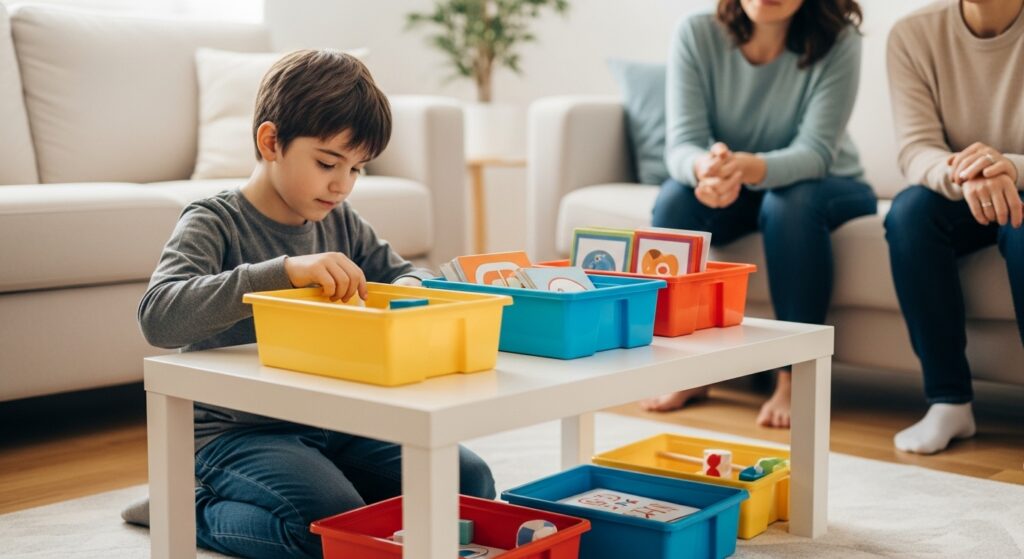
They can be created to meet the specific needs of a child and help develop an essential skill, build concentration and focus, and can be made from different items for closed-ended, open-ended, or schedule-based activity options.
5: Close Ended Activities
For close-ended activities, books, puzzles, mazes, and shape-sorters are perfect task boxes because each activity has a specific result or end; simply place the game and its corresponding pieces into a box, with shoe boxes often working great, making it easy for children to focus, follow rules, and experience the satisfaction of completing a structured activity.
6: Open Ended Activities
Open-ended activities in boxes are ideal for younger kids because they have no specific result, making them perfect for art projects and creative thinking; coloring supplies, stamps with ink pads, paper, and toothpick & marshmallow building are great examples, and using a prompt with crayons, like “imagine the moon and draw a picture,” helps children explore, experiment, and express themselves freely while enjoying each task.
7: Independent Activity Schedule
When setting up an independent activity schedule, it’s helpful to place task boxes around the room so your child moves and move independently between a close-ended task once completed or an open-ended task, using a timer so they know when to transition, giving them structure while still allowing freedom and choice to explore at their own pace.
When promoting independence, encouraging exploration, and ideas in indoor activities, focus on starting at a comfortable place that fosters growth without pressure.