
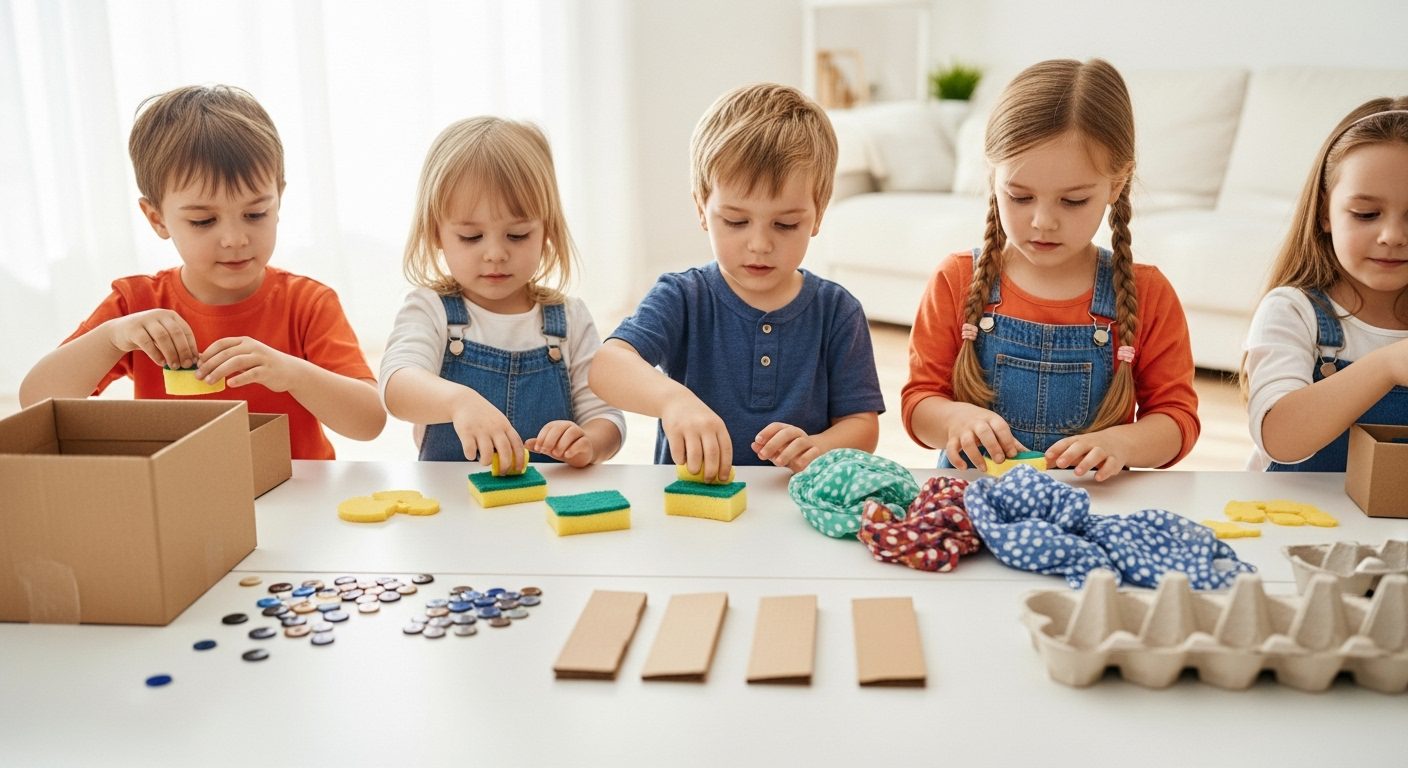
You don’t need fancy toys or expensive gadgets to keep your little ones happy and learning.
These indoor activities for kids that can be played or set up using daily household items can turn simple things around the home into engaging playthings that stimulate young minds and spark creativity and imagination.
From turning everyday household items into educational playthings to designing hands-on activities that build cognitive skills, fine motor skills.
These common items become powerful tools for early learning and child development.
Even small setups in the home learning environment can support practical learning, skill building, and fun sensory play for age 0-5 years, making every day a chance to explore and grow.
The Magic of Household Items for (0-12 months child’s)
For 0-12 months child’s, even the simplest household items can create extraordinary learning experiences that spark early curiosity and imagination.
I’ve seen infants mesmerized by the sound of a spoon tapping a bowl or the texture of a soft toy against their fingers, turning ordinary objects into moments of wonder.
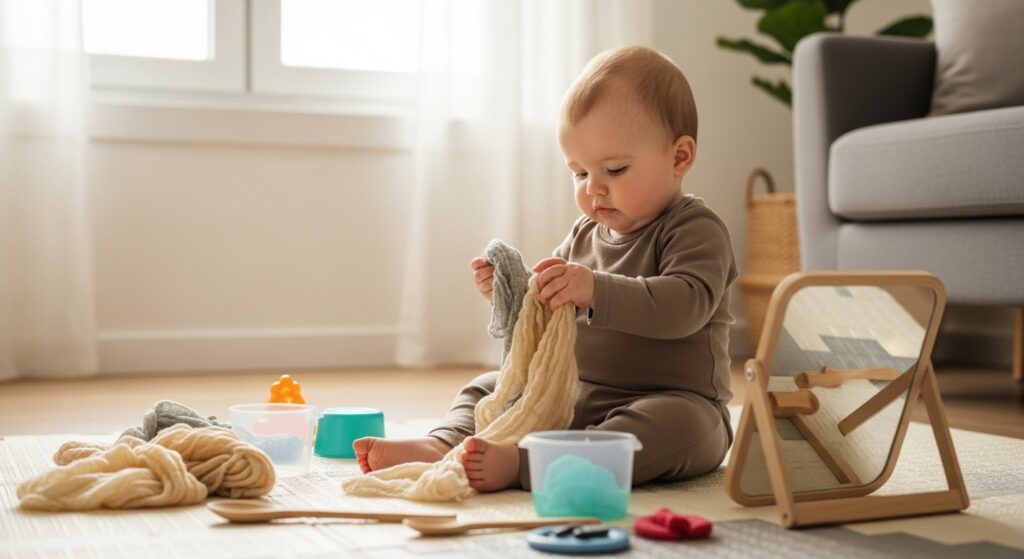
Using a box as a peek-a-boo prop or safe items for gentle object play encourages creative use, pretend play, and early problem solving.
All while nurturing interest and resourcefulness These hands-on learning moments and home-based learning setups provide rich learning experiences that engage tiny minds, develop foundational skills, and make exploration an everyday joy.
1: Plastic Containers and Lids
Plastic containers and lids are simple household items that can be used for a fun activity where your baby can enjoy stacking and sorting.
This encourages fine motor skills, hand-eye coordination, and spatial awareness while making exploration and discovery exciting through hands-on play.
Even ordinary plastic containers can become tools for early play, object manipulation, and sensory learning, turning indoor activities into meaningful learning through play experiences.
- What this activity is: A playful exercise using plastic containers and lids for stacking and sorting.
- How to set it up: Gather plastic containers of different sizes and matching lids, place them within reach, and let your baby stack containers and match lids.
- Benefits for kids: Enhances fine motor skills, hand-eye coordination, coordination, motor development, sensory learning, and encourages curiosity and exploration.
2: Mirrors
A non-breakable mirror at your baby’s level can turn ordinary household items into an exciting Activity where your little one can explore their reflection.
Through simple Mirror Play, babies develop self-awareness, emotional development, and improve visual skills while enjoying sensory exploration.
This setup encourages early emotional skills, visual tracking, and meaningful skills developed, making indoor play fun and educational
- What this activity is: A playful setup using a mirror for babies to explore their reflection and practice Mirror Play.
- How to set it up: Place a non-breakable mirror securely at the baby’s level so they can touch and look safely.
- Benefits for kids: Enhances self-awareness, emotional development, visual skills, visual tracking, sensory exploration, and supports early emotional skills and skills developed.
3: Scarves or Fabric Scraps
Using scarves or small pieces of fabric as part of peek-a-boo games is a fun Activity where your baby can feel different textures and enjoy sensory exploration.
This type of tactile play helps develop object permanence, encourages interaction and social interaction, and supports sensory development.
Incorporating household items, You little ones can play it even with low energy, that’s why it also called low energy activity.

In this way turns simple indoor activities into opportunities for exploration, texture exploration, and early learning, making sensory play exciting while building meaningful skills.
- What this activity is: A peek-a-boo and sensory exploration game using scarves or fabric scraps.
- How to set it up: Provide soft scarves or textures of fabric, let your baby feel and interact with them during play.
- Benefits for kids: Supports object permanence, sensory development, tactile play, social interaction, interaction, exploration, and early learning.
Activities for Toddlers (1-3 Years)
1: Wooden Spoons and Pots
Using pots and wooden spoons for musical exploration is a lively Activity where your toddler can bang and discover different sounds and rhythms.
This type of sound play or music play enhances auditory discrimination, rhythm, and coordination, while encouraging motor coordination and sensory play.
Incorporating household items in this way transforms simple indoor activities into fun sessions of early learning, helping toddlers develop auditory skills and other essential skills developed naturally through interactive, hands-on engagement
- What this activity is: A music play activity using pots and wooden spoons to explore different sounds and rhythms.
- How to set it up: Place safe pots on the floor and give your toddler wooden spoons to bang and experiment with sounds.
- Benefits for kids: Improves auditory discrimination, rhythm, coordination, motor coordination, auditory skills, encourages sensory play, and supports early learning and skills developed.
2: Cardboard Boxes
Boxes can become a world of imaginative play where your child can transform them into cars, houses, or tunnels.
This Activity encourages creativity, problem-solving, and spatial reasoning, letting your child take the lead and enjoy pretend play.
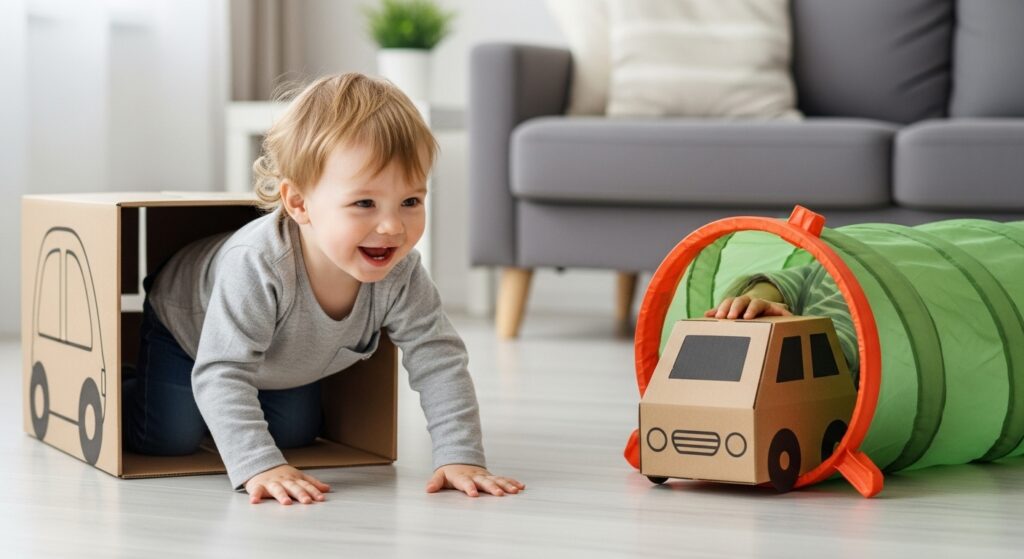
Using simple household items for creative play turns indoor activities into opportunities for early learning, cognitive skills, and exploration.
- What this activity is: A pretend play activity using boxes to create cars, houses, or tunnels.
- How to set it up: Provide safe cardboard boxes and let your child decorate or arrange them into different imaginative setups.
- Benefits for kids: Enhances creativity, problem-solving, spatial reasoning, cognitive skills, encourages exploration, imaginative play, and supports skills developed
3: Measuring Cups and Funnels
Using measuring cups and funnels during water play is a hands-on Activity where your child can pour and measure, boosting fine motor skills, hand-eye coordination, and coordination.
This simple setup encourages exploration, sensory play, and understanding of volume, while introducing early math concepts and practical learning through indoor activities with everyday household items, supporting motor development and other essential skills developed.
- What this activity is: A water play activity using measuring cups and funnels to pour and measure.
- How to set it up: Fill a small container with water, give your child measuring cups and funnels, and let them experiment safely.
- Benefits for kids: Develops fine motor skills, hand-eye coordination, coordination, understanding of volume, supports early math concepts, encourages sensory play, practical learning, and exploration.
Activities for Preschoolers by household items (3-5 Years)
1: Buttons and Beads
Using big buttons or big beads for sorting and counting is a simple Activity where your child can use a variety of colors, sizes, and shapes to explore math skills and fine motor skills.
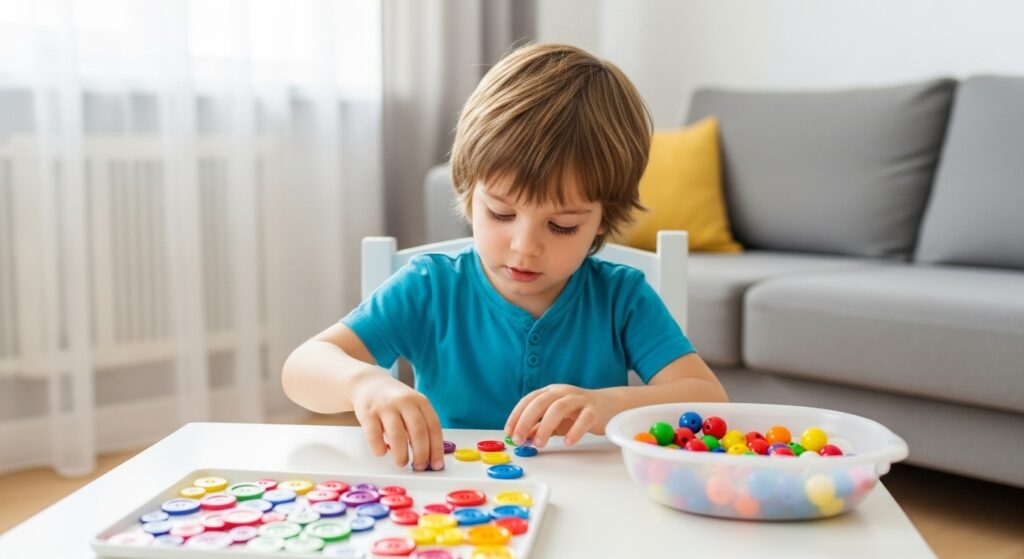
This hands-on indoor activity turns household items into an opportunity for object sorting, early math, counting games, motor development, and hands-on learning, making indoor activities fun and educational while boosting essential skills developed.
- What this activity is: A sorting and counting game using big buttons or big beads of different colors, sizes, and shapes.
- How to set it up: Provide a variety of buttons or beads and let your child sort and count them during play.
- Benefits for kids: Enhances math skills, fine motor skills, color recognition, early math, object sorting, motor development, and hands-on learning, supporting essential skills developed.
2: Plastic Bottles
Creating DIY sensory bottles using plastic bottles filled with water, glitter, big beads, sand, or various materials is a hands-on Activity where your child can explore visual effects and auditory effects.
This sensory play encourages sensory exploration, focus, self-regulation, calming strategies, and develops attention skills.
While turning simple household items into fun indoor activities for early development, hands-on learning, and essential skills developed.
- What this activity is: A DIY sensory bottles activity using plastic bottles and safe materials for sensory exploration.
- How to set it up: Fill plastic bottles with water, glitter, big beads, or sand, seal securely, and let your child explore safely.
- Benefits for kids: Enhances sensory play, focus, self-regulation, calming strategies, attention skills, supports hands-on learning, early development, and develops essential skills developed.
3: Sponges and Paint
Sponge painting is a fun Activity where your child can experiment with cut sponges in different shapes to create painting projects.
This encourages creativity, artistic expression, and fine motor skills, while exploring textures and patterns.
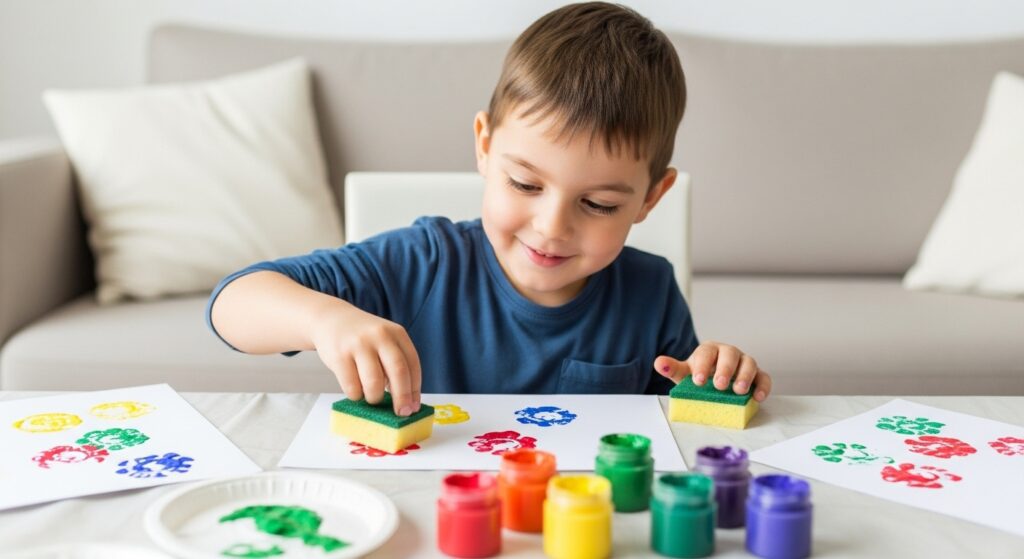
Using simple household items for hands-on learning, creative play, and sensory play turns ordinary indoor activities into exciting opportunities for art exploration, motor development, early learning, and essential skills developed.
- What this activity is: A sponge painting activity using cut sponges of different shapes for painting projects.
- How to set it up: Provide sponges, paint, and paper, and let your child experiment with textures and patterns.
- Benefits for kids: Boosts creativity, artistic expression, fine motor skills, motor development, encourages sensory play, hands-on learning, art exploration, early learning, and develops essential skills developed.
4: Egg Cartons
Using egg cartons as mini planters is a rewarding Activity where your child can plant seeds, water them, and watch plants grow over time.
This hands-on activity promotes understanding of nature, responsibility, fine motor skills, and motor development, while encouraging nurturing, observation skills, and early science concepts.
Turning simple household items into engaging indoor activities fosters gardening skills, hands-on learning, and essential skills developed.
- What this activity is: A planting seeds activity using egg cartons as mini planters.
- How to set it up: Give your child egg cartons, soil, and plant seeds, and let them water and care for them.
- Benefits for kids: Builds responsibility, understanding of nature, fine motor skills, motor development, observation skills, nurturing, supports early science, gardening skills, and essential skills developed.
Benefits of Using Household Items for Kids
Engaging in educational play with everyday household items like a cardboard box or a plastic bottle gives children rich experiences and engaging experiences that turn simple activities into meaningful educational experiences.
These moments of learning through play support developmental milestones, nurture a love for learning, and encourage hands-on learning, practical learning, and creative play.
By exploring the endless possibilities of indoor activities, kids strengthen cognitive development, problem-solving, and skill building.
While discovering the joy and educational fun hidden in everyday items. Below we listed some main benefits of using household items to keep child’s happy at home.
- Cost-effective: Using household items at home can save money, reduce expenses, and replace expensive toys for indoor activities.
- Environmental awareness: Repurposing and recycling simple objects teaches children to be environmentally conscious while promoting creativity and imagination.
- Imaginative play: Simple objects can spark imaginative play, complex play, and problem-solving skills, turning indoor activities into early learning and practical learning opportunities.
- Bonding time: Engaging together strengthens the bond between child and caregiver, creating cherished memories through shared Activity.