
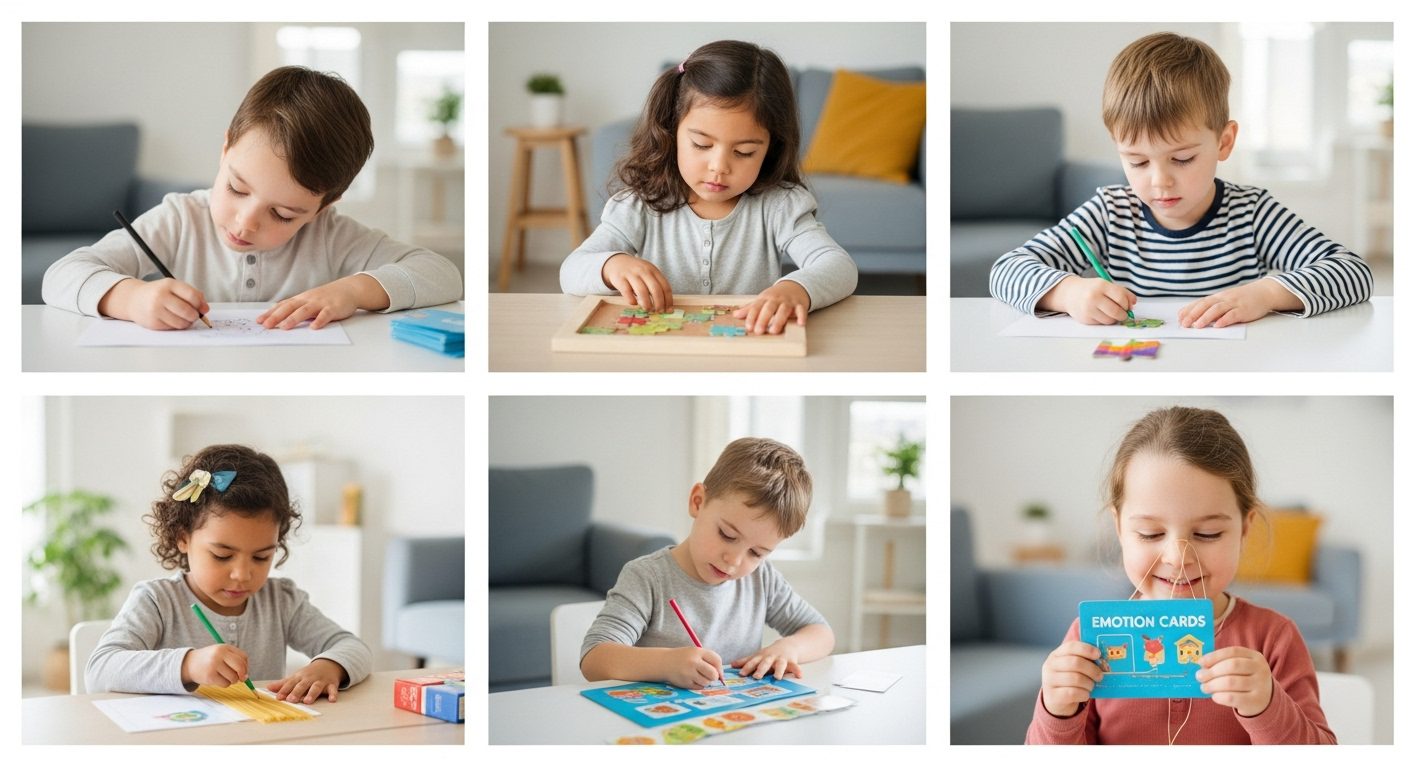
Some days, kids have big feelings but very little energy and that’s okay. When little bodies feel tired or overstimulated, they don’t need loud games or endless running. They need calm, gentle moments that still feel fun and comforting. Low energy indoor activities give children a chance to relax, slow down, and feel safe while staying happily engaged.
As a parent, I’ve learned that quiet play can be just as meaningful as active play. These simple activities help kids unwind, recharge, and enjoy being indoors without pressure. They create peaceful moments where imagination, connection, and small joys take the lead.
Calm and Creative low energy Play Ideas
1: Morse Code Messaging
At home, when energy is low, I’ve seen how kids can still learn and play through Morse code, using simple dots and dashes made with light or sound to create secret messages. This calm, screen-free activity feels like quiet fun, yet it gently supports spelling and listening skills without pressure.
What I love most is the natural teamwork it builds, as parents and carers sit close, decode together, and guide kids at their own pace. It’s a peaceful way to stay connected indoors while keeping minds active and emotions settled
2: DIY Jigsaw Puzzle
One of my favorite quiet-time activities with my kids is creating a jigsaw puzzle from drawings, magazine pictures, or photos. The setup is simple we create the pieces by cutting our own designs into shapes and mix them up for a fun craft activity. Kids putting the puzzle together develop fine motor skills, logic, and problem-solving while giving them a sense of satisfaction for completing something by themselves.
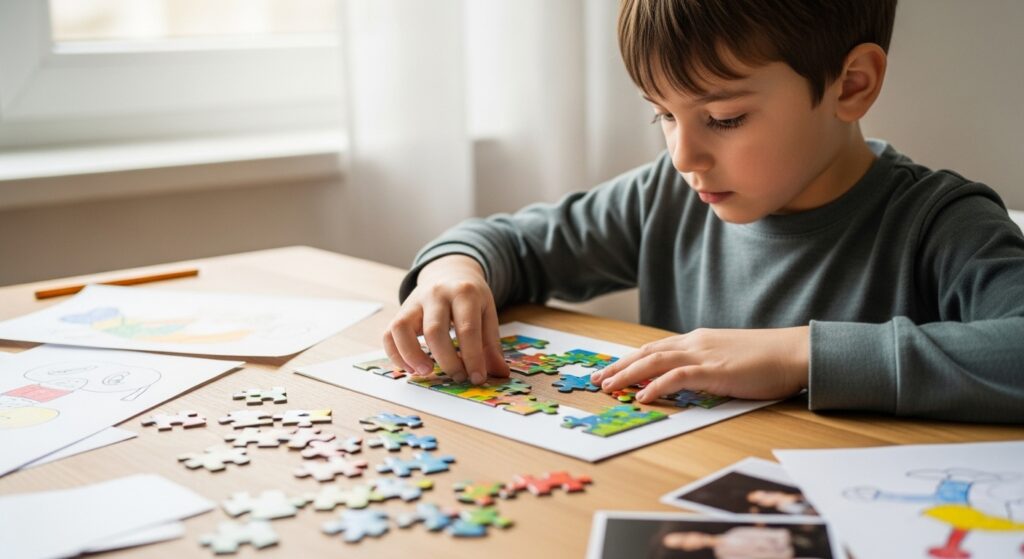
I’ve noticed that this activity encourages artistic expression, sharing, and teamwork, and the added bonus is it keeps little minds engaged, helping them learn to focus and enjoy creative, hands-on fun in a calm, relaxed way
3: Threading with Pasta
One of the most calming and easy activities for little hands is threading pasta on a string. Children can make simple jewellery or fun shapes, adding patterns, painted designs, or themed creations like rainbows or garlands, which keeps them engaged while improving hand eye coordination and fine motor control.
This activity is especially great for toddlers and preschoolers, but it can also be extended for older kids. I’ve seen how it sparks creativity, focus, and early problem-solving while giving a satisfying sense of accomplishment, turning quiet play into a meaningful and fun learning moment.
4: Paper Tearing Collage
A simple craft I often enjoy with children is a hands-on Paper Tearing Collage, which helps develop fine motor skills and creativity. Kids enjoy the satisfying act of ripping colourful paper into pieces and sticking them to create their own picture or abstract design. No scissors are needed, making it ideal for little ones learning to control their fingers and hands.
This activity also gives space to express themselves freely, experimenting with color and texture, while keeping energy low and minds fully engaged in imaginative, calming play.
5: Draw a map
One of the most fun and imaginative activities I enjoy with children is drawing a map, a creative way to explore their surroundings or invent their own worlds. Whether sketching a treasure map, designing a make-believe island, or mapping out a bedroom, this activity blends art, storytelling, and careful observation.
It encourages kids to slow down, notice details, and let their imagination guide them, It can be played by a solo children and it converts solo play indoor activities in to rich and engaging experience where creativity meets play, and learning about spaces and ideas becomes exciting while keeping energy gentle
Gentle Exploration and Learning ideas for kids
1: Constellation Hunt
Head outside on a clear evening or calm night and start this gentle activity by helping kids find basic constellations in the sky. The setup is simple and easy just step under the open sky, let eyes adjust, and begin looking closely for bright stars and familiar patterns.

As a parent, I love how this quiet time encourages noticing, curiosity, and relaxed moments of sharing together. It works across seasons, is easy to repeat, and turns learning into calm fun, helping kids slow down while still feeling connected and engaged.
2: Make a DIY Compass
For a calm but fun activity, I like helping children build a DIY compass using simple household items. This hands-on project lets them learn about magnetism, Earth’s magnetic field, and basic navigation while watching how a magnetised needle naturally aligns to point north.
I’ve found it sparks curiosity and encourages problem-solving as little explorers or anyone interested in science can see things work in real time. It also pairs nicely with map reading, treasure hunts, or nature walks, combining learning with quiet, engaged fun and a sense of accomplishment
3: Tray Memory Game
When energy is low at home, I often turn to the Tray Memory Game, a brilliant activity that can always challenge children in a playful, low-pressure, and no-stress way. It’s easy to set up using simple items, and it can be adapted for different ages, group sizes, or even playing solo, in pairs, or as a family.
I’ve seen how it builds visual attention skills, focus, and recall, while sparks of curiosity and friendly competition keep it fun. This great game gently supports building confidence by encouraging kids to practice memory in a calm, supportive setting.
4: Weather in a Jar
A fun and hands-on way to explore weather-themed science with children is creating a Weather in a Jar experiment. Start with a clear jar filled with water, then add a cloud of shaving foam on top. Kids can drip coloured water through the foam and watch it slowly fall like rain, release patterns, and even create a splash.
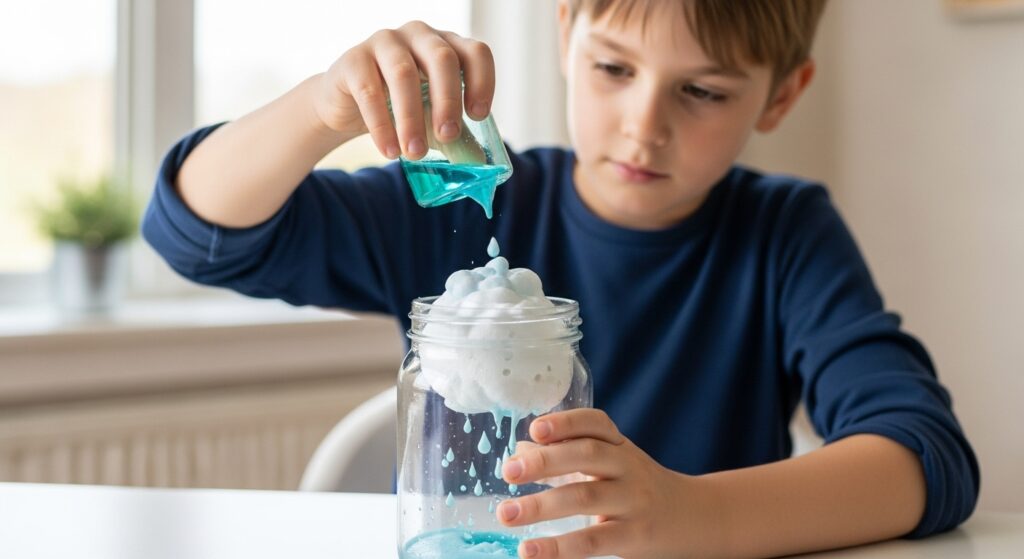
This gentle activity introduces concepts like clouds, rain, and colour, while adding a touch of magic. It’s simple and keeps children curious, This thing makes it a perfect fun even for small apartments, where even limited space can become a little world of discovery.
5: Pebble Towers
A calm and easy hands-on way I love with kids is to build small towers using smooth pebbles, where they can explore balance, weight, and shape at their own pace. We test each stack gently, celebrate wins, and keep sharing ideas together, which turns quiet play into focused learning.
This simple setup invites kids to slow down, notice how pieces fit, and enjoy steady progress without pressure, making it perfect for low-energy moments when attention is soft but curiosity is strong.
Fun and Engaging Quiet Activities
1: Rock and Shell Hun
A brilliant way to engage children in a quiet yet stimulating activity is a Rock and Shell Hunt at the beach or in a safe outdoor space. Using a simple container or bucket, kids can search for smooth pebbles, spiral shells, unusual finds like sea glass, or rocks shaped like hearts.
This playful exploration promotes attention to detail, creativity, and mindfulness while letting children enjoy collecting their treasures for crafts, display, or a lasting memory of the day. It’s suitable for all ages and turns calm observation into a fun, hands-on adventure.
2: Emotion Cards
A simple, thoughtful activity I often use with children is Emotion Cards, which provide a safe and supportive space to explore feelings. By writing different emotions on pieces of card and taking turns to pick and talk about them, kids (and grown-ups) can build emotional vocabulary, share experiences, and connect deeply.

This gentle way encourages listening skills, self-expression, and emotional intelligence, creating light, meaningful moments that call for reflection. It’s a lovely method for parents and carers to learn more about each other while guiding kids toward understanding their own emotions naturally.
3: Chinnies
One of my favorite light-hearted indoor activities for children on rainy weather is Chinnies, a silly and simple way to spark laughter. Kids draw a face on their chin, turn their head upside down, and use a phone or mirror to bring the character to life. It’s a quick mood boost that only needs a bit of creativity, a safe pen, and sometimes a camera to capture the fun.
Everyone is often surprised at how expressive a chin can be, and these moments create joyful memories that are perfect for low-energy, indoor play
4: Water Play Tub
A fantastic, hands-on activity for toddlers and young children is a Water play tub, a calm, focused way to explore a mini world of sensory development. Using a shallow container with a few household items under supervision, kids can scooping, pouring, floating, or sinking objects, which encourages coordination, imaginative thinking, and curiosity.
This simple setup holds attention, lets them discover new ways to play, and adds joyful splashing without high energy activities, making it a perfect indoor activity that’s engaging, safe, and endlessly creative
5: Hangman
A well-loved, simple game that never fails to engage children is Hangman, a word guessing activity that’s great for practising spelling, expanding vocabulary, and developing problem-solving skills. Using just paper and pencil, kids can work on language while enjoying the challenge of solving a mystery word.
The game is easy to adapt for different reading levels and can be played almost anywhere at home, in restaurants, or while waiting in the car making it a perfect low-energy indoor activity that combines fun, learning, and quiet engagement for children of all ages
Making Indoor Play Meaningful
All these low-energy indoor activities provide a perfect balance of fun, learning, and gentle engagement for children. From creative crafts and hands-on experiments to imaginative play and mind-stimulating games, each activity encourages curiosity, problem-solving, and skill development while keeping energy levels manageable.
They are easy to set up, adaptable for different ages, and foster creativity, focus, and self-expression in a safe, calm environment. Whether your child is exploring sensory play, storytelling, or memory games, these ideas help turn indoor time into meaningful, enjoyable, and educational moments. Incorporating such activities regularly can support growth, confidence, and joyful learning every day