
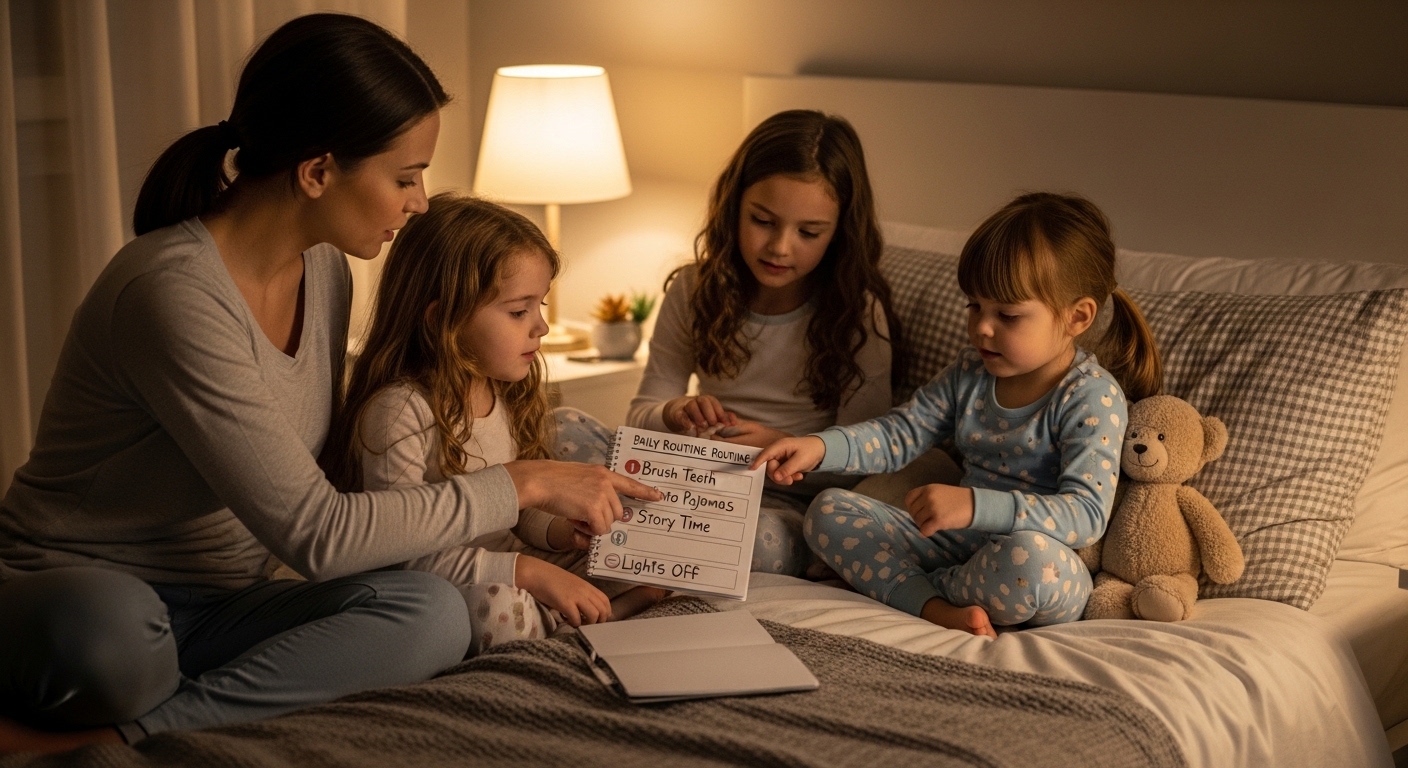
I don’t know about you, but in my case bedtime used to be the toughest part of my day. My kids would suddenly remember every little thing they needed to do, and nothing seemed to get them to sleep.
That’s when I actually realized a proper bed time routine for kids is essential.
We start our bedtime with small tasks like Turning off screens early, reading a short story, and playing soft music became our nightly habits.
Slowly, my kids started winding down without fuss, and bedtime stopped feeling like a battle.
Now, I actually look forward to these quiet moments. It’s our little time to connect, relax, and prepare for sleep. In this guide, I’ll share the routines and tips that worked for us, hoping they also help other parents to turn their bedtime into a calm and happy part of the day.
What Are the Benefits of bed time routine for kids
I was also in very trouble as I mentioned above that bedtime becomes the hardest part of our whole day I watch a Caregiver video on YouTube at this topic.
After it, When I first started a bed time routine for my kids, I didn’t expect that it will make such a big difference in our bedtime battle. Over time, I noticed so many positive changes that made both their nights and my evenings calmer.
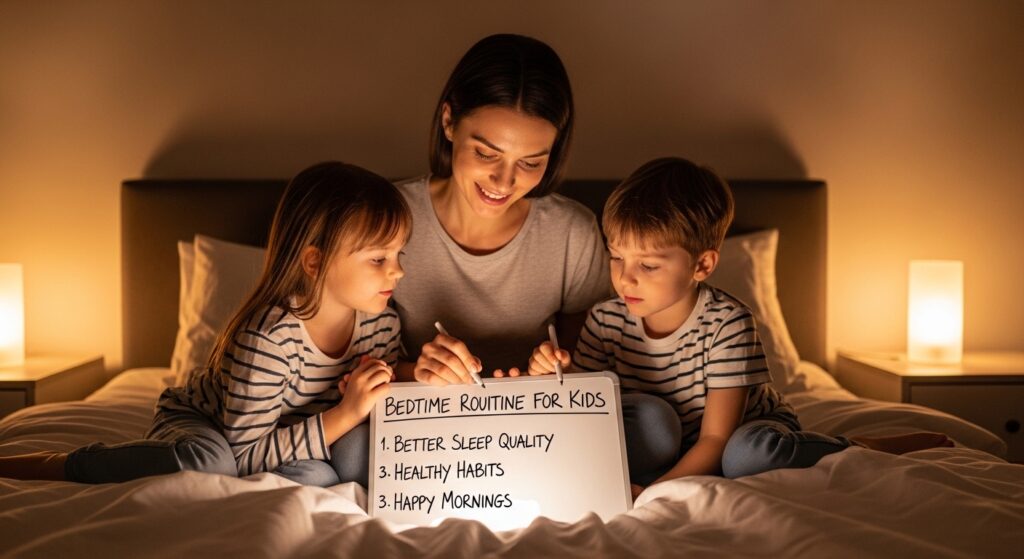
I write down below some of the top benefits which I noticed after following a consistent bedtime schedule :
Better Sleep: The most obvious benefit is that my kids started falling asleep faster and stayed asleep longer. No more midnight wake-ups or tossing and turning.
Improved Mood: Mornings also became too easier. Well-rested kids are happier, calmer, and more focused during the day. I noticed fewer tantrums and more smiles at breakfast.
Healthy Habits: Following the same routine every night teaches them discipline and consistency, which helps in other areas of life too.
Family Bonding: Our bedtime routine includes reading stories, talking about the day, or playing soft music together. These small moments became our special time, it strengthens our connection.
Stress Reduction: Knowing what comes next makes kids feel safe and relaxed, reducing anxiety for both them and me.
Honestly saying, having a consistent routine turned our evenings from chaotic to peaceful. It’s amazing how a few small, consistent steps can change the whole vibe of the night.
How To Build a Bedtime Routine for Kids ?
This question is the core concern for every parent, but don’t worry—after reading this blog post, you will be able to completely build your own routine.
For me, bedtime routine work best when I keep things simple and consistent.
I usually choose three or four calming activities like giving my child a light snack, helping them brush their teeth, putting on cozy pajamas, and reading a short bedtime story together.
I always try to follow the same order every night because it helps my child know that sleep time is coming.
To make bedtime even smoother, I start winding down the house by dimming the lights and turning off screens before bed, so the whole environment feels calm and ready for sleep.
Some common bedtime activities that are proven to have positive effects on a child’s sleep include :
- Offering a healthy bedtime snack or giving a bottle/breastfeed
- Giving a warm bath or changing diapers
- Brushing teeth and using the bathroom
- Reading a calming bedtime story
- Singing a lullaby or a soft song together
- Gentle massage, cuddling, or rocking
- Chatting about how their day went
I always try to end the bedtime routine with a sweet goodnight kiss and turning off the lights. I leave the room when my child is sleepy but still awake, so they can learn how to fall asleep on their own.
This really helps because if they wake up during the night, they don’t feel scared or confused when I’m not in the room. I also make sure to set a fixed bedtime every night, so my child gets the right amount of sleep according to their age.
10 Easy Bedtime Tips for Kids to Sleep Peacefully
1: Make a cozy and comfortable space
I make sure my child’s bedroom is ready for a peaceful night’s sleep. That means a comfy mattress and soft pillows, the right room temperature ideally around 65–70°F (18–21°C)—and sometimes their favorite blanket or stuffed animal to help them feel safe and cozy.

I also like to bring a bit of a cozy, calming “forest” vibe into their room with soft lighting, gentle decorations, or nature-themed touches that make bedtime feel extra special.
2: Introduce Gradual Changes
When I first tried to adjust my kids’ bedtime, I learned that sudden changes rarely work.
Kids can get fussy or anxious if you try to move bedtime by hours all at once. That’s why I started to introduce gradual changes instead.
We began by shifting bedtime just 10–15 minutes earlier every few nights. It seemed small, but over a week, it made a huge difference.
My kids didn’t resist, and I could see them falling asleep more peacefully. Gradual changes also helped me to adjust our evening routine slowly, like finishing dinner earlier, dimming lights, and starting our reading time sooner.
By making bedtime shifts slow and predictable, my kids felt comfortable and secure, and I didn’t have to battle tears or arguments. It’s amazing how tiny changes can help in establishing a smooth sleep without stress for anyone.
3: Give Your Child full Control at Bedtime
I like to involve my child in creating their bedtime routine by letting them pick their bedtime story, choose their pajamas, or decide on a calming activity.
Some nights, they decided to brush teeth first, other nights the story came first. This small flexibility kept bedtime fun and calm, instead of stressful. I noticed they followed the routine more willingly because it felt like their idea, not just mine.
4: Be Patient During Bedtime Challenges
When my child resists going to bed, I choose to remain calm and patient because I know my reaction can either prevent bedtime from becoming stressful experience or make it harder.
I use gentle reminders and positive reinforcement instead of demands, and I speak in a soft tone so my child feels safe and understood.

Over time I have learned that real inner strength helps in navigating challenges, especially during common bedtime challenges that test every parent.
Sometimes I even try simple meditation for parents, tools created specifically for parents, to reset my own mood so I can offer better bedtime routine support.
This calm parenting approach helps me create a more stress-free bedtime where my child slowly learns to cooperate without fear or pressure.
5: Use a Visual Schedule to Support the Bedtime Routine
I like to show the steps of our bedtime routine using simple pictures and easy words. Sometimes I use a small chart with drawings that show what comes first and what comes next.
This really helps my child understand the order of activities and remember what to do without me repeating everything.
I see that when they can see the routine clearly, bedtime feels more fun, organized, and easier to follow.
6: Share Your Own Bedtime Habits as an Example
I listen it from a (doctors ad) children learn a lot just by watching us. That’s why I try to model good bedtime habits in my own routine.
I share my simple nighttime steps with my child so they can see that healthy sleep habits are not just for kids, but for adults too.
When they see me following a routine, it becomes easier for them to take their own bedtime routine seriously.
7: Set a Clear Wind-Down Time Before Bedtime
I start winding down my child an hour before bed by moving them from active play to quieter activities.
I turn off televisions and other electronic devices and keep the room calm by minimizing loud noises.
I also gradually lower the lighting so their body can produce melatonin and feel ready for bed.
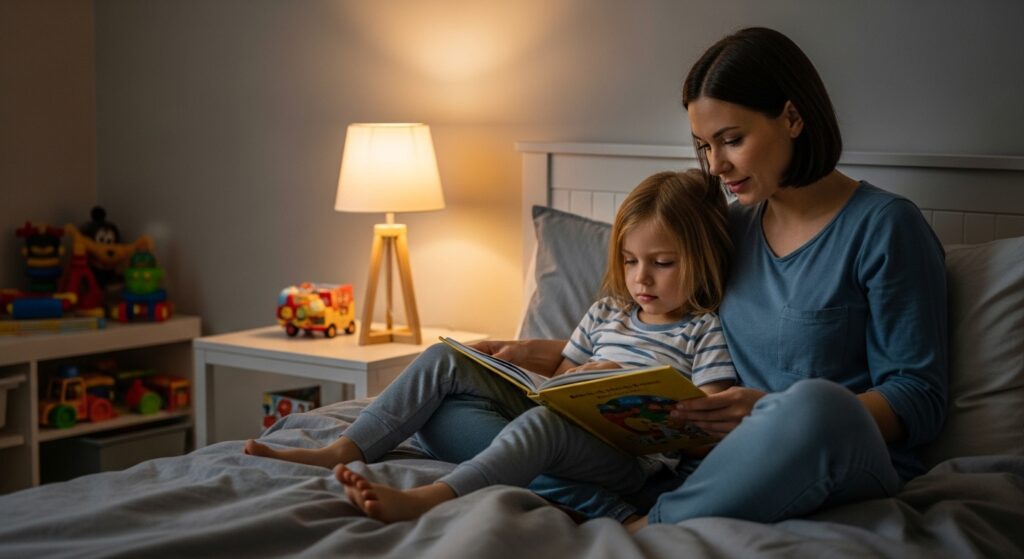
During this time, we often read a short bedtime story which helps them relax and unwind, making the bedtime routine smoother and encouraging healthy sleep habits.
8: Help Your Child Relax Before Bed
I like to include simple relaxation exercises in my child’s bedtime routine, like taking deep breaths together or doing a few gentle stretches.
These small activities help them release any leftover energy or tension, making it much easier for them to settle down.
Sometimes, we also play calming music or a Sleep Story, which really helps my child relax and smoothly transition into sleep.
9: Keep Bedtime Rules Clear and Consistent
I always make sure to set clear expectations for bedtime and talk them through with my child during the day when they’re alert and happy.
I explain what I expect during our bedtime routine, like brushing teeth, putting on pajamas, and getting into bed on time.
By having these conversations ahead of time, it’s much easier for my child to follow the routine calmly, and we avoid arguments or meltdowns when it’s actually bedtime.
Keeping things consistent has made our nights smoother and more peaceful.
Age-Specific Bedtime Routine for kids

Bedtime Routine for 1-Year-Old
- Wind-Down Ritual: Give a warm bath, then a cozy bottle or feeding, followed by lullabies or soft singing.
- Separation Comfort: Let your baby have a small blanket or stuffed toy to help with crib drop-off.
- Routine Steps: Bath, put on pajamas, read a short book or sing lullabies, cuddle, then into the crib.
- Sleep Space: Keep the room dim and quiet; use a white-noise machine if it helps.
- Duration: Experts suggest keeping the bedtime routine around 20 to 30 minutes, which is enough time to help your 1-year-old relax and settle down for sleep.
Bedtime Routine for 2-Year-Old
- Short Stories: I usually read one or two simple books and let my child point to the pictures while we read together.
- “No” Phase Choices: During this phase, I offer small choices, like “Blue pajamas or green?” so my toddler feels a bit of control over bedtime.
- Crib-to-Bed Transition: If we’re moving from a crib to a toddler bed, I include the new bed in our wind-down talk, saying things like, “Your big-kid bed is for sleeping.”
- Bedtime Routine Chart: I use a visual chart with stickers for each completed step—bath, brushing teeth, reading a book—which makes bedtime fun and encourages independence.
- Calm Activity: A quiet puzzle or stacking toy helps my child settle down and relax before bed.
- Duration: Experts recommend keeping the bedtime routine around 20 to 30 minutes also for 2 years old, which is usually enough time for a toddler to relax, follow the steps, and get ready for sleep. (Source: National Sleep Foundation recommends 20–30 minutes for toddler bedtime routines.)
Bedtime Routine for 3-Year-Old
- Complex Stories: I choose short books with simple stories and ask my child fun questions like, “What happens next?” to keep them interested in reading before bed.
- Simple Choices: I let my child make small decisions like “Which pajamas do you want to wear?” so they feel independent while still following our routine.
- Nightlights & Comfort Objects: I keep a soft nightlight on and let my child sleep with a favorite stuffed animal to help them feel safe and comfortable.
- Wind‑Down Play: Gentle activities like drawing, using play‑dough, or doing an easy puzzle help my child settle down and calm their energy before bedtime.
- 3‑Year‑Old Routine Steps: Our usual sequence is a bath, brushing teeth, storytime, our goodnight ritual with hugs and kisses, and then lights out.
- Duration: According to experts at PatPat, a bedtime routine for a 3‑year‑old should last about 30 to 40 minutes, giving enough time for all the steps to help the child wind down without feeling rushed.
Bedtime Routine for 4‑Year‑Old
- Independence: I encourage my child to pick their own pajamas or choose which book we read, giving them a sense of control and confidence at bedtime.
- Pre-Bedtime Conversations: I spend a few minutes asking my child about their day and how they felt, which helps them reflect and feel heard.
- Advanced Wind‑Down: We practice simple breathing exercises like “smell the flower, blow out the candle,” which teaches my child how to calm themselves before sleep.
- 4-Year-Old Routine Steps: Our routine also includes a brief gratitude moment, where my child names one thing they loved about their day, helping them associate bedtime with positive feelings.
- Duration: Experts suggest keeping a bedtime routine for a 4-year-old around 30 to 40 minutes, which gives enough time to complete all the steps calmly and helps children wind down effectively before sleep.
Bedtime Routine for 5 to 10 Year Old
- Increased Independence: I let my child follow a simple checklist brush teeth, pack their backpack for the next day, and even set the alarm so they feel responsible and confident.
- Negotiating Bedtimes: We use reasonable bedtime windows, like “Lights out between 8:30 and 9:00 PM,” which helps them feel included while keeping consistency.
- Limiting Electronics: I make sure all screens are turned off at least 60 minutes before bedtime, giving their mind time to relax.
- Importance of Reading: We include a chapter from a favorite book or a short family read-aloud, which helps calm the mind and makes bedtime enjoyable.
- Sleep Challenges Solutions: If my child has worries, we sometimes write them down in a journal to clear their thoughts and relax before sleep.
- Consistency Matters: Even as children grow, keeping a regular bedtime routine supports their need for structure, self-regulation, and a good night’s rest.
- Duration: Experts recommend that bedtime routines for children aged 5 to 10 last around 30 to 45 minutes, which is enough time to complete all steps calmly and ensure restful sleep.
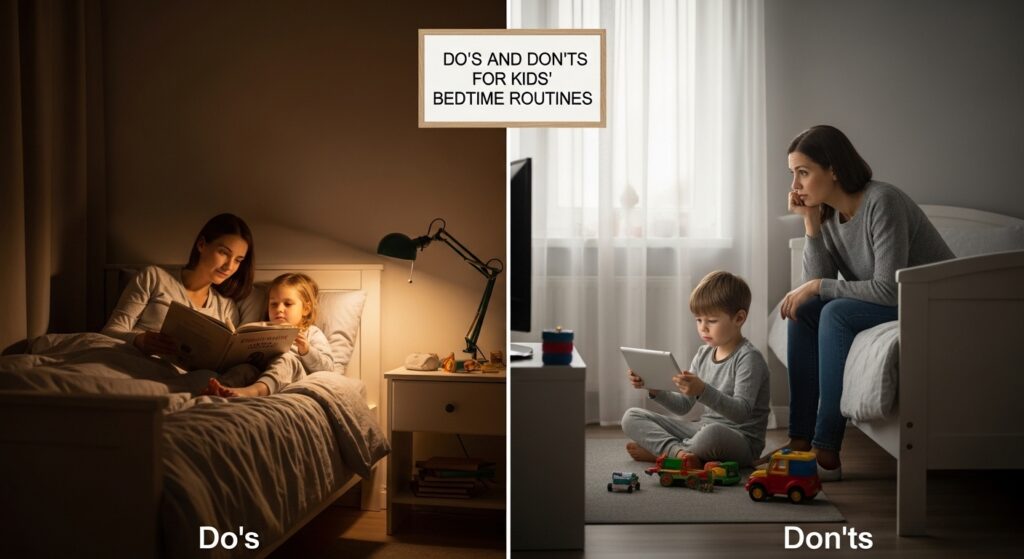
Do’s and don’ts for kids during bedtime routines
Creating a smooth bedtime routine means including habits that help your child relax and sleep well, while avoiding common mistakes that can make bedtime stressful.
By following these simple dos and don’ts, you can make bedtime calm, enjoyable and effective.
Do it every day : A bedtime routine for kids works best when the same steps are followed every night, or at least as many nights as possible. Experts also recommend that both parents take part whenever they can, as this helps children get the full benefits of a consistent and calming bedtime routine.
Do include essential activities: A consistent, 30–60 minute, 4-step bedtime routine for kids bath, pajamas, brushing teeth, and reading—helps them relax and sleep better. I turn off all screens at least an hour before bed and keep the bedroom cool, quiet, and dark, using nightlights or comfort objects to help ease any fears.
Do work on flexibility: I try to stay flexible with our bedtime routine. While keeping it consistent is important, I allow small changes for schedule shifts or special occasions. These little adjustments help the routine stay practical without feeling too strict.
Follow sleep hygiene rules: I always make sure our bedroom is dark, cool, and quiet to help my child sleep better. If they’re afraid of the dark, I use a dim nightlight, which makes them feel safe. I also turn off all screens at least an hour before bedtime, and once they’re tucked in, I try to keep the rest of the house quiet. Even small noises can keep kids awake, so we transition to calm, quiet activities in the evening to make bedtime peaceful.
Dont’s :
Start when they’re already sleepy: I’ve noticed that when my child gets overtired, they can become hyperactive or cranky, making it much harder for them to fall asleep. That’s why I like to start the bedtime routine before I see those first yawns.
Don’t offer heavy meals right before bed: I try not to give my child big meals or heavy snacks right before bed, because they can feel uncomfortable and have trouble falling asleep.
Don’t do stimulating activities: I avoid letting my child do high-energy activities like running, jumping, or rough play right before bed. These can make them too excited and make it harder to settle down. Instead, I choose calm activities that help them relax and get ready for sleep.
Don’t rush the routine: I make sure to give enough time for each part of our bedtime routine without rushing. When we hurry, it can stress my child out and make it harder for them to relax and fall asleep.
Don’t offer any caffeine in the evening: I make sure my child avoids foods and drinks with caffeine, like soda, energy drinks, or caffeinated teas, especially in the evening. I’ve noticed that even a little caffeine can make them too energized and make it harder for them to fall asleep.
Parent’s Frequently Asked Questions
What is a good bedtime routine for kids?
A good bedtime routine for kids is consistent and lasts about 30–60 minutes. It can include a bath, putting on pajamas, brushing teeth, and reading a story. Turn off screens an hour before bed and keep the bedroom calm, cool, and dim, using a nightlight or favorite comfort object if needed.
How Much Sleep Do Preschoolers Need?
Preschoolers need about 10–13 hours of sleep each day, including naps. Keep regular bedtimes, wake-up times, and nap or quiet times to help them get enough rest.
What if My Child Has Sleep Problems?
If your child has trouble sleeping, try keeping a consistent bedtime routine, limiting screens before bed, and creating a calm, comfortable sleep environment. Gentle reminders, relaxation activities, or reading together can also help. If sleep problems continue, it’s a good idea to talk to your pediatrician for extra guidance.
What time should a toddler go to bed?
Most toddlers do best with bedtime between 7:00 and 8:00 PM. If they still nap, aim for about 4.5–5.5 hours after their last nap.
At what age should I start a bedtime routine?
You can start a bedtime routine as early as 6 months. For a 1-year-old, simple steps like a bath, feeding, and lullabies work well.