
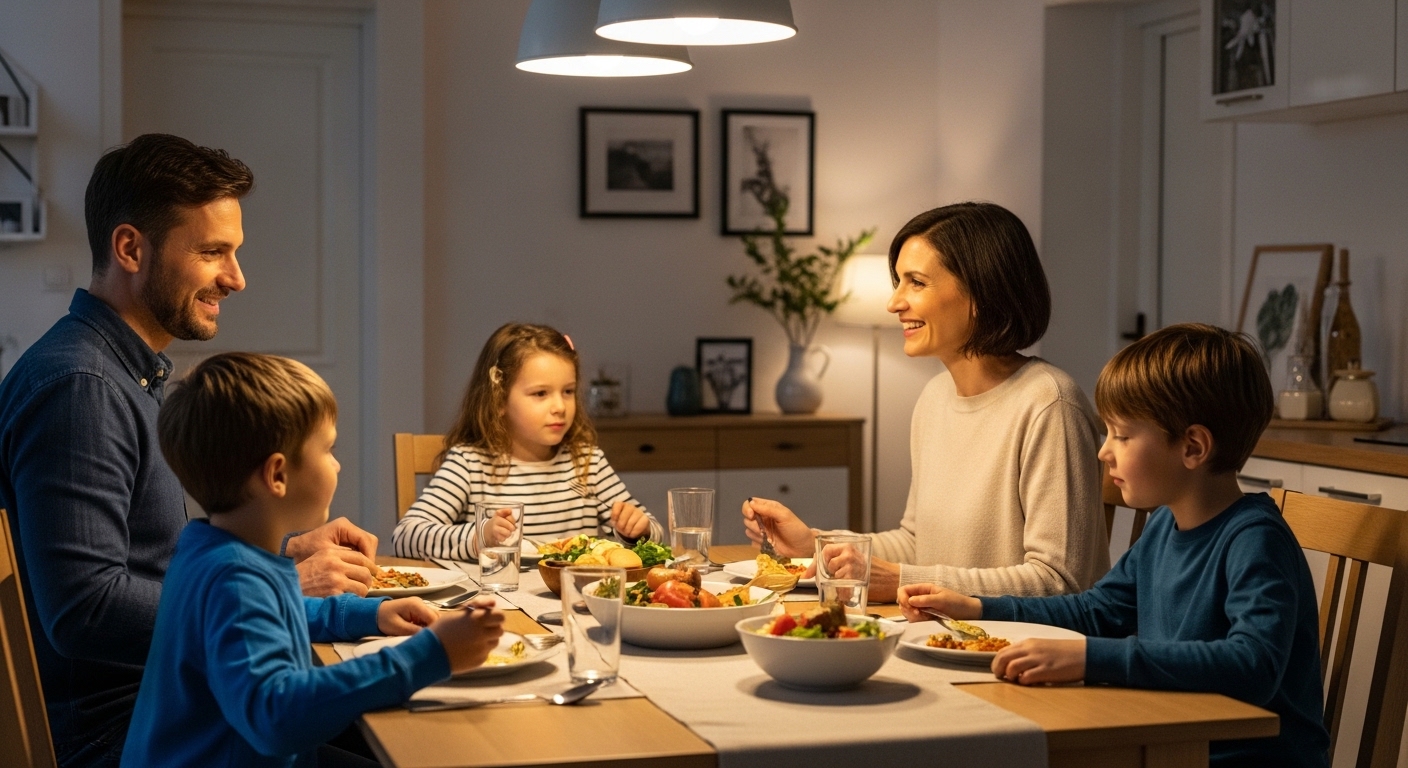
I know how hard it can be to create peaceful mealtimes and meaningful family memories, especially with young kids, when everyone busy with chatting, or sneaking glances at their phones.
Over the time, I realized that having a daily dinner routine could make our evenings, dinner time and even bedtime calmer and more meaningful.
Simple habits, like sitting together at the same time, sharing stories about our day, or turning off distractions, helped us connect better. These small changes made our dinner time peaceful and supports our family bonding.
In this post, I’ll share easy tips to create a healthy family dinner routine that brings families closer and makes every meal enjoyable.
Why Family Dinners Matter Now More Than Ever
I feel that in our hyperconnected world of 2026, the importance of family dinners has grown because family dinners matter for kids and parents alike.
While following a consistent routine, I see how shared family meals and eating dinner together support children and family relationship in a positive way.
According to the research of Journal of Family Psychology 2023, children who eat dinner with families at least four times a week it promotes better nutritional intake, reducing obesity risk, and fostering emotional security when we stay present at the table and focus on meaningful family connection.
Below I listed these benefits in the form of bullet points.
- Better academic performance in children
- Lower risk of substance abuse and depression
- Improved vocabulary and communication skills
- Healthier eating habits and lower obesity rates
- Stronger family bonds and sense of belonging
When I focus on a shared mealtime experience, I see how a organized dinner routine creates meaningful family connection and supports real family bonding at dinner.
Sitting together allows me to notice my kids’ feelings, encourage kids emotional growth, and strengthen kids social skills through simple conversation.
Having a clear dinner routine also makes bedtime routine much easier and calmer.
My Four-Step dinner Routine that works for our family
Before sharing full routine that has brought more calm and connection in our evenings, I want to explain the mindset I use whenever we create a new routine at home.
This is just a four step meal routine overview which I follow for my own family.
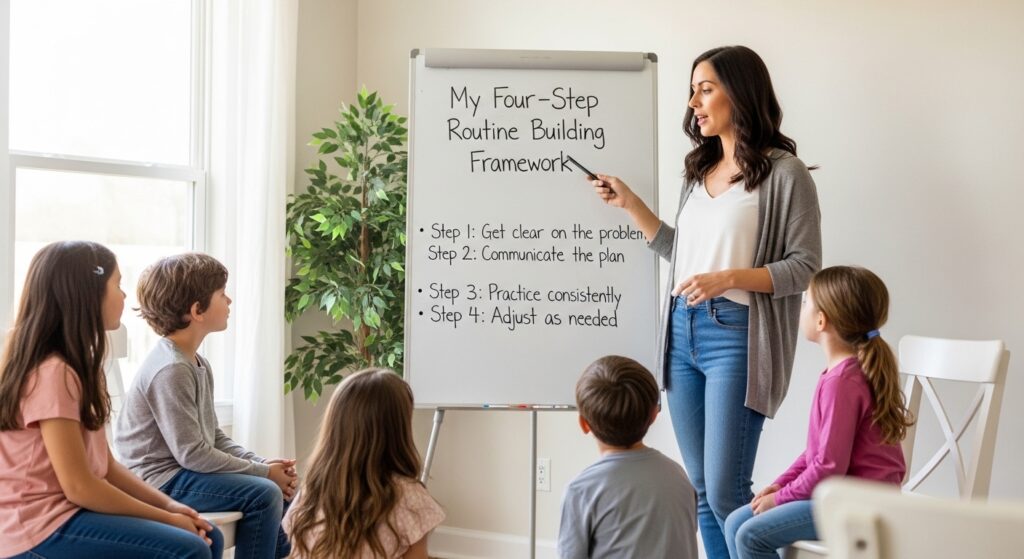
A complete step by step explanation for each point will be discussed below. Don’t miss any single step to make your meal time calm and happy.
Step 1: Get clear on the problem
Step 2: Communicate the plan
Step 3: Practice consistently
Step 4: Adjust as needed
Using this framework makes it easier for me to create a calm and predictable dinner routine with my kids, even in a small home with several young children.
Step 1: Keep Meal Planning Simple for Family Dinners
Planning family dinners doesn’t have to be complicated. I learned that keeping meals simple makes the whole evening less stressful and more enjoyable.
Choosing a few easy recipes, prepping ingredients in advance, or even rotating a set of favorite dishes helps everyone know what to expect.
When meals are simple, it’s easier to get everyone to the table on time and actually enjoy the time together. This small step has made our dinners calmer, and my kids even started helping out in the kitchen, which makes the routine feel fun and relaxed.
How to come up with meal ideas ?
When I focus on family dinner, I often start by researching meal ideas and finding new recipes that are simple, kid-friendly meals.
I like to check the internet for recipes, Pinterest recipes, and AllRecipes.com to get recipe inspiration online and Pinterest meal ideas that suit our taste.

One trick I use for meal ideas is to build recipes around ingredients I already have at home. This makes planning dinners much easier and takes away the stress of figuring out what to cook.
I also like trying new recipes or recreating copycat favorites like Olive Garden salad dressing, Panera broccoli cheese soup, or Wendy’s chili.
Like others of course, we still enjoy classic homemade comfort food like chicken enchiladas or wet burritos.
Keeping a mix of family-friendly recipes not only adds variety to our dinners but also helps create flexible meals that everyone enjoys.
This approach works especially well during laid-back summer days when we want simple, enjoyable family dinners without too much fuss.
Make a Solid Organization System
When I work on dinner and morning routine, I rely on a strong organization system to keep meals smooth and stress-free.
I start by organizing meal ideas into a meal ideas pool and create a flexible weekly list where I assign meals to specific days using a pre-assigner planning style.
I make a weekly meal list that maps dinners to nights, like Sunday meal planning, Friday meal planning, or Saturday meal planning, while cross-referencing family schedules to ensure nothing conflicts.
I keep track of freezer inventory, check what’s on sale to plan budget-friendly meals, and create a simple shopping list for grocery and other household items.
By using weekly planning sheets or cooking time notes you can maintain a simple dinner routine.
Step 2: Our Pre-Dinner House Reset
One simple way to keep our dinner routine calm is to do a quick reset before dinner. While I finish cooking, I call the kids into the main area for a five-minute tidy.
Since I can see the dining and living room from the kitchen, I give small reminders when needed :
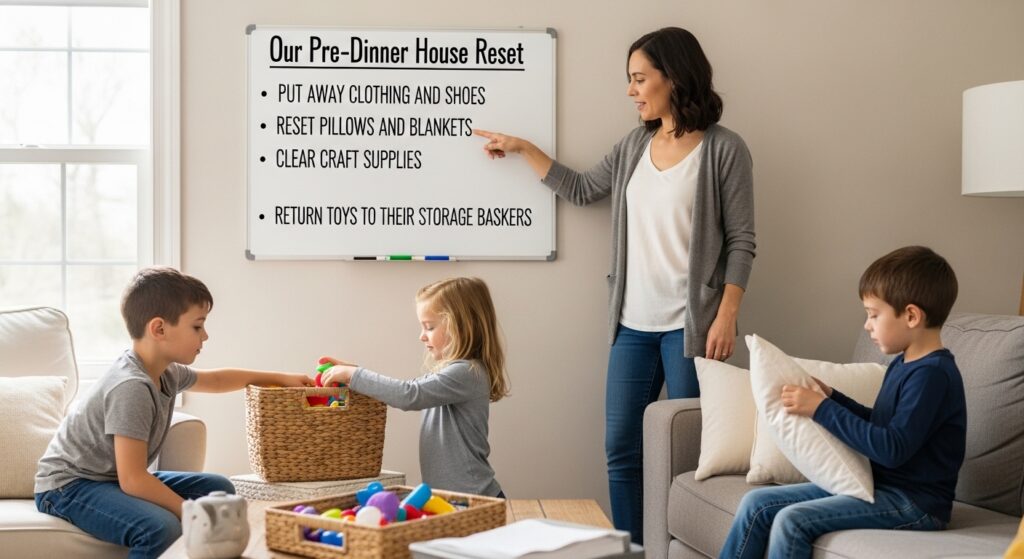
- Put away clothing and shoes
- Reset pillows and blankets
- Clear craft supplies
- Return toys to their storage baskets
I follow a structured pre-dinner routine that helps create evening calm for families and keeps our dinner routine smooth.
While giving toddlers a toddler pre-dinner snack or high chair snack so they stay engaged. I involve kids in last-minute meal prep by spinning salad greens, folding dish towels, setting the table, and carrying food, giving them small responsibilities that teach kid participation in meals and toddler engagement during dinner prep.
When dinner time goes smoothly, the whole evening feels more peaceful. Whole family enjoy eating together and then relax with simple routines like reading, a short walk, or getting ready for bed.
Step 3: Family gathered around the dinning table (Real magic starts)
I always focus on setting the table properly using nice dishes and cloth napkins to make mealtime feel special while also teaching child’s good table manners.
Once everyone is seated in their spots, with the (youngest in a booster and the older kids on chairs or the bench) we begin our family dinner.
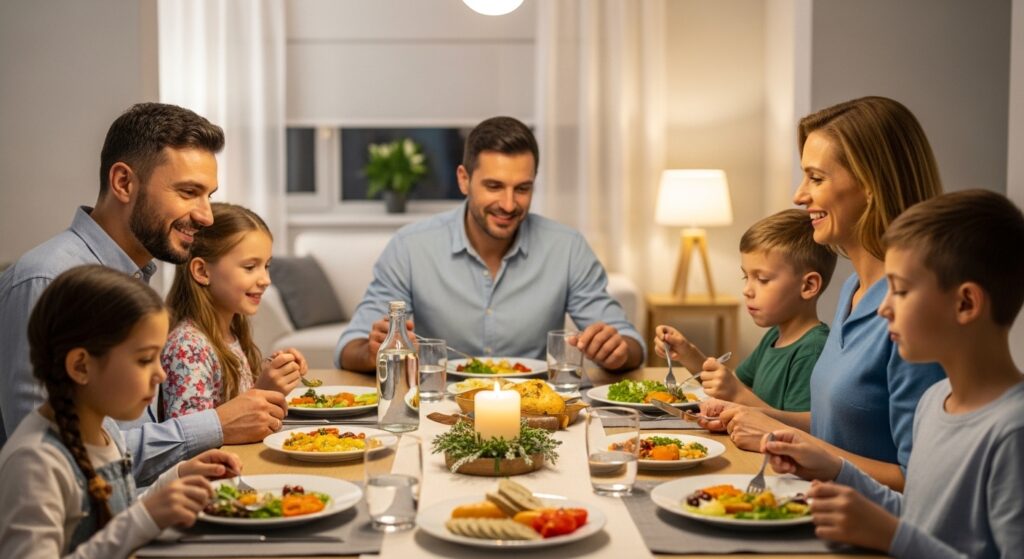
I noticed that a simple but predictable structure helps children to slow down and truly connect with the family while enjoying mealtime together.
Over time, I notice that kids respond better when they know what to expect.
The flow feels natural and even toddlers feel included in the family dinner , which makes the whole evening calmer and more enjoyable for everyone.
We start our family dinner with Prayer
In our daily dinner routine, I make it a point to start dinner with prayer It creates a grounding start to meal and a mindful family moment that helps everyone to shift their energy. We hold hands for family blessing and family participation in prayer.
Sometimes naming each family member or singing familiar songs like Doxology, family fun song, or the “shake the love around” song.
I notice that kids’ movement break like wiggling and shaking during this joyful family prayer reduces restlessness and signals the dinner start, making the mealtime feel structured and calm.
This quick family ritual keeps children engaged, fosters child engagement in pre-dinner ritual, and helps everyone connect as a family before dinner.
Did you also want to know how we started our After school routine for kids as well as dinner routine which help’s to keep child’s happy and engaged?
The Sitting Rules That Keep Dinner Peaceful
To support calm conversation and minimize chaos, we have two simple expectations:
1. Knees or bottom rule:
Kids can sit on their bottoms or on their knees, but they should not stand on chairs or hover. This helps keep everyone steady and prevents spills.
2. Stay-in-your-chair-until-excused rule:
Kids remain seated during the meal unless they politely ask to be excused for a specific reason, such as using the bathroom. When they are done eating, they ask to be excused from the table.
These two gentle guardrails help our simple family dinner routine stay peaceful and predictable.
The Visual Timer Strategy
In our dinner routine, I use a visual timer as part of a visual timer strategy to create family dinner structured and a predictable that helps to manage kids eating habits.
When kids are tired, they may not want to eat, but clear mealtime cues help them know it’s time for dinner without nagging
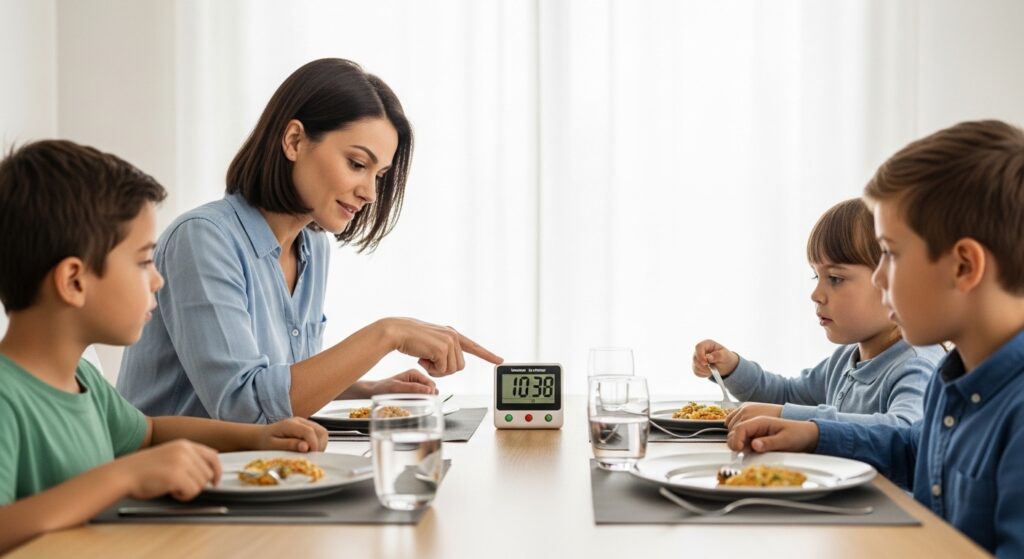
The timer gently signals when it’s time to start, continue, and finish, which motivates finished plates, encourages positive reinforcement, and allows for sweet treats after dinner as a reward.
Step 4: After-Dinner Cleanup Routine
In our after-dinner cleanup routine, I follow a predictable evening rhythm to create a calm end of the day while teaching responsibility to kids.
Everyone helps by clearing the dinner table, bringing serving dishes to the counter, taking dishes to sink, and putting cutlery to sink.
Kids also help load the dishwasher, rinse dishes, and wipe the table with a damp cloth.
After dinner gets done we handle floor cleanup by cleaning crumbs and spills, vacuuming the bench and chairs, and putting napkins into the laundry hamper.
This consistent cleanup system allows children to develop competence, gain confidence, and feel proud of meaningful household contribution while making focused and calm evenings part of our pre-bedtime routine.
Final Thoughts
Creating a calm and connected family dinner routine doesn’t happen overnight, but every small step really makes a difference. Start with simple habits, stay consistent, and adjust things as needed to fit your family’s schedule.
Over time, you’ll see evenings become more relaxed, kids participating willingly, and mealtimes turning into moments for connection, conversation, and fun.
Even minor changes—like planning meals ahead or involving children in simple tasks can transform dinners into a peaceful and enjoyable that everyone looks forward to.